
CUTTING BOARDS: THE SCIENCE AND HISTORY
Wood or Plastic? Which is the safest?
The origins of the cutting board dates back to the beginning of recorded history in Mesopotamia, an area now occupied by Iraq and Kuwait. Discoveries were found in the form of a clay tablet, depicting an adult male using a sharp instrument to cut on a flat surface.
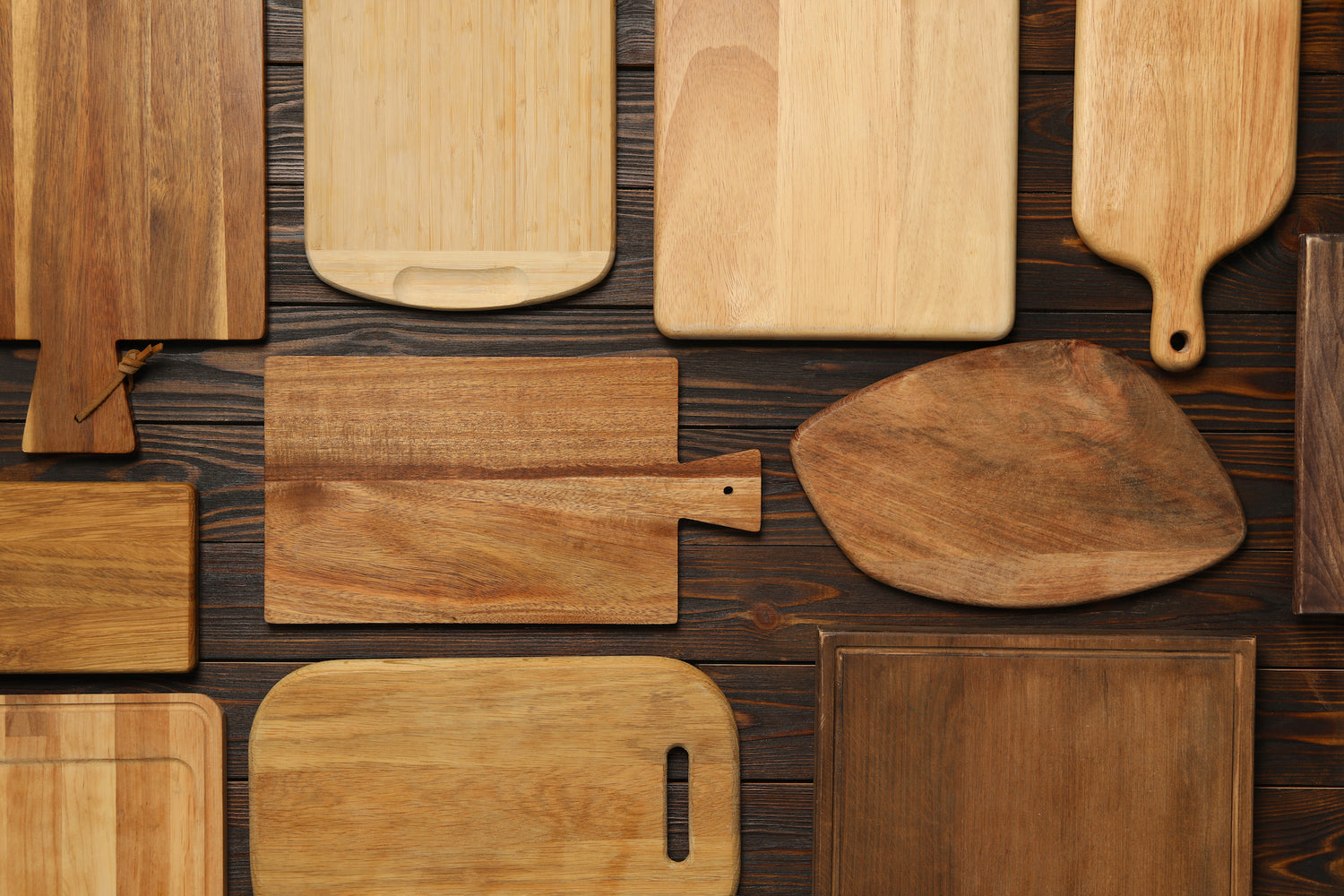
Through the years cutting boards have been constructed from a wide variety of resources including marble, stone, wood, metal and plastic. Wood boards were the most common, largely due to their natural durability and the easy access to the required timber. Plastic cutting boards were originally introduced in the early 1920s but weren’t marketed in the US until the 1950s. They gradually increased in popularity, claiming to be the more sanitary option. They were much easier to clean because they could be put in the dishwasher, so they had to be safer.
It turns out, this notion wasn’t based on factual studies. Although wood cutting boards are harder to sanitize and not dishwasher safe, they are just as safe if not a little bit safer than plastic boards. Most importantly, wood boards are naturally anti-microbial, whereas plastic is prone to hiding bacteria in the inevitable scars and gouges that occur over time. Although wood will scar and gouge, it’s natural ability to dry limits surface bacteria and reduces possible cross contamination (UC Davis food researcher Dean Oliver, Ph.D).
Not all woods are created equal and the type you use matters. Hardwoods like maple and walnut are better at resisting bacteria because they are very dense, fine grained and will draw in bacteria which then die as the board dries (Ben Chapman, food safety researcher NC State).
“Soft woods, like cypress, pose a greater food safety risk, because they have larger grain, which is a potential risk of the wood splitting more easily, creating grooves for bacteria to thrive.
It is also important to note that regularly maintaining your wood cutting board with recommended cleaning and/or sanitizing in conjunction with beeswax or a food safe mineral oil or mineral oil/beeswax blend can greatly reduce the risk of bacteria of any kind.
The bottom line: All cutting boards pose a risk when not properly maintained and sanitized. Wood cutting boards have a slight advantage, but whether you use a plastic or wood cutting board, you run the risk of contaminating your food if you don’t wash them properly between uses.
“We believe, on the basis of our published and to-be-published research, that food can be prepared safely on wooden cutting surfaces and that plastic cutting surfaces present some disadvantages that had been overlooked until we found them.” (Dean Oliver PHD UC Davis Researcher)
In addition to our laboratory research on this subject, we learned after arriving in California in June of 1995 that a case-control study of sporadic salmonellosis had been done in this region and included cutting boards among many risk factors assessed (Kass, P.H., et al., Disease determinants of sporadic salmonellosis in four northern California counties: a case control study of older children and adults. Ann. Epidemiol. 2:683-696, 1992.). The project had been conducted before our work began. It revealed that those using wooden cutting boards in their home kitchens were less than half as likely as average to contract salmonellosis (odds ratio 0.42, 95% confidence interval 0.22-0.81), those using synthetic (plastic or glass) cutting boards were about twice as likely as average to contract salmonellosis (O.R. 1.99, C.I. 1.03-3.85); and the effect of cleaning the board regularly after preparing meat on it was not statistically significant (O.R. 1.20, C.I. 0.54-2.68).
We know of no similar research that has been done anywhere, so we regard it as the best epidemiological evidence available to date that wooden cutting boards are not a hazard to human health, but plastic cutting boards may be.
Leave a comment
Also in THE WOOD FILES
The Big Summer Plan
By Michele Parkinson July 18, 2026
No one ever thinks about all the little things that go into painting a house. This isn't even our first time painting an exterior, but we still thought, “Our house is small, this shouldn’t take that long.”
Continue reading
THE PURSUIT OF VALENTINES DAY TRIVIA
By Michele Parkinson January 21, 2026
In the 1800s, doctors frequently advised heartbroken patients to eat chocolate to "calm their pining" for lost love.
Continue reading
THE REASONS BEHIND OUR NEED TO CLEAN, ORGANIZE AND BUY PLANNERS IN JANUARY
By Michele Parkinson January 20, 2026
Our obsession with planners is a fascinating mix of ancient tradition, retail psychology, and a specific cognitive quirk known as the "Planning Fallacy." If you are someone who buys a beautiful new planner every January only for it to become a glorified paperweight by March, you are definitely not alone. Here are some of the most interesting facts about our "Planner Obsession":
Continue reading